1. Welcome
Read description
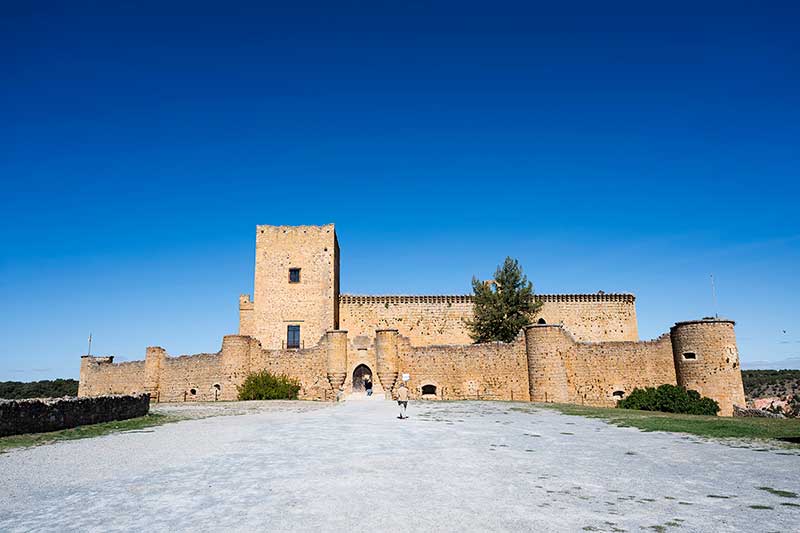
Welcome to the amazing Pedraza Castle!
Come in, see, listen and enjoy a happy stay in this wonderful castle!
Along the tour you will see some arrows that you can follow in order not to get lost.
To start the tour, place yourself in the center of the entrance courtyard, near the ticket office, and go to the next audio.
1A. Pedraza and its Castle
Read description
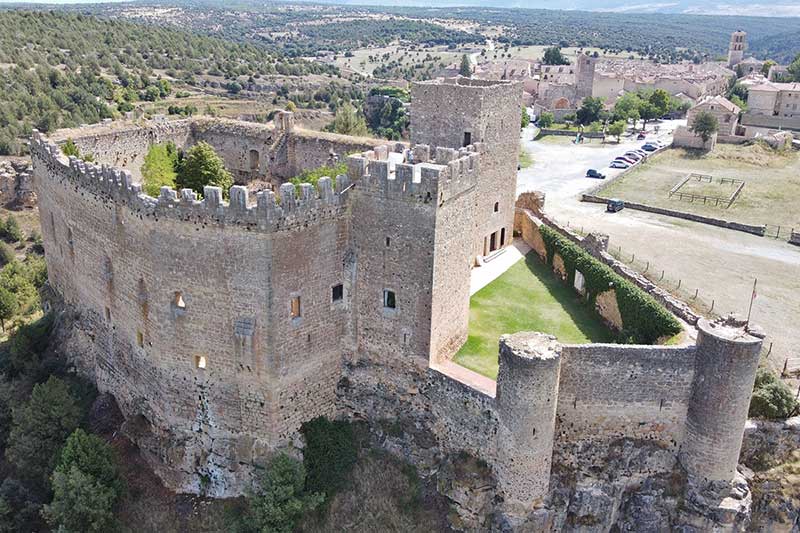
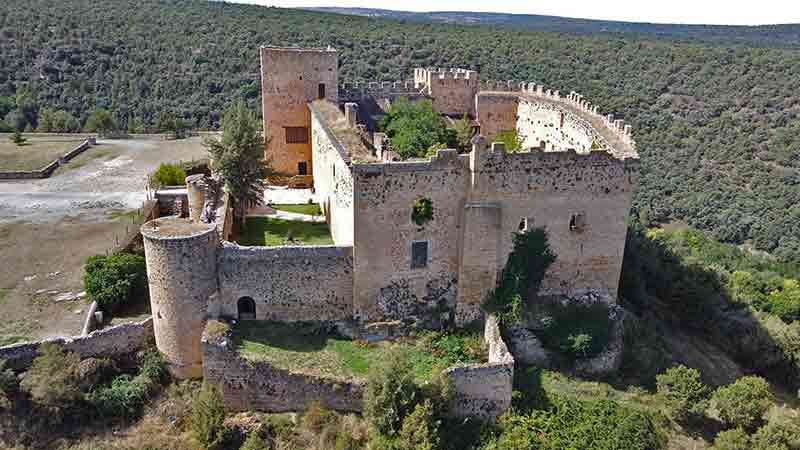
Why is it called Pedraza? Easy. Pedraza is a very old town that was declared a historic site in 1951. Its name comes from Latin, from the word “petra,” which means “stone” or “rock.” And this makes sense because the town is built on a large rock, making it an important and easily defensible place for centuries.
The first castle, built in the Romanesque style, was constructed in the 13th century by Fernán García de Hita, an important name in Castile.
But… the Herrera and Fernández de Velasco families rebuilt it in the 15th and 16th centuries, turning it into the castle we see today. These two families are quite important in the history of the castle. Check this out:
The Herreras were the first to use the castle as a fortress to defend the region, and later, the Fernández de Velasco family turned it into a symbol of power and prestige. Castles went from being places of defense to becoming elegant residences for nobles, or in other words, the rich. Why was Pedraza so important?
Well, because many wealthy nobles and merchants of merino wool (which was exported to the Netherlands to make tapestries) settled there. So… Pedraza was a center of power, economy, and administration in the country. It’s like a living museum of those times of splendor. But, over time, sheep farming lost its importance, the feudal system disappeared, and so the castle lost its splendor. It ended up being abandoned until 1926, when the painter Ignacio Zuloaga bought it for 13,000 pesetas (78 euros) and restored it, turning it into his painting studio and home.
Did you know?… One of the most famous events in Pedraza is the “Night of the Candles,” in July. During this night, all the electric lights in the town are turned off, and thousands of candles light up the streets and squares, creating a magical atmosphere.
1B. The Wall
Read description
And… how was it built?
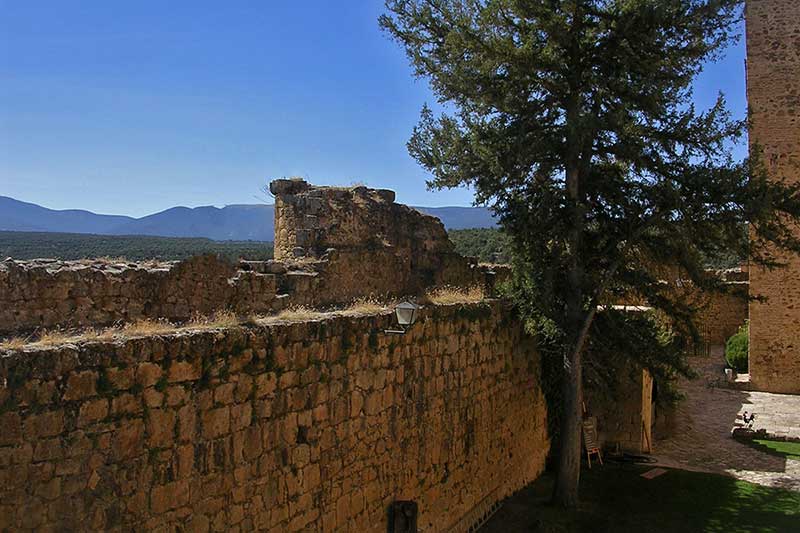
The wall was built in the 13th century with very strong stone (though it has had to be repaired several times to keep it standing
Over the years, neither bad weather nor enemy attacks managed to destroy the wall. However, if you look closely, you can see the marks of ancient projectiles, like stones from catapults, cannonballs, and shots from old weapons like muskets. If you look carefully, you can try to spot these marks on the castle’s facade.
Remember that during the War of Independence against Napoleon, French troops invaded much of Spain, and many fortified towns like Pedraza suffered damage.
Even so, projectiles were not the worst. The most significant damage the castle suffered was when it was abandoned, and locals took stones and other materials to build their own houses. It is believed that the keep lost about five meters in height, and in some parts of the wall, up to two or three meters of stone are missing.
2. Escape Door
Read description
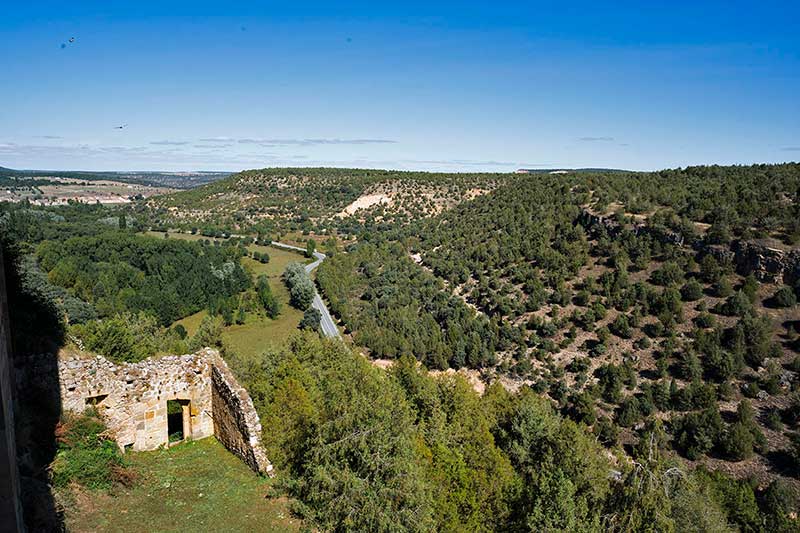
At the far end of this entrance courtyard, there is something that at first might not seem very important, but in reality, it was key in case of attack: a secret escape door.
Although Pedraza Castle was built to withstand attacks, the owners also considered the possibility of the enemies winning. That’s where this emergency exit came into play.
This door was very well hidden, only those who knew where it was could use it. If the attack lasted too long and things inside the castle became very difficult, this door allowed them to go out to get food, water, or even to flee.
Now head over to the cannon port that is located right in front of the entrance gate and once there, go to the next audio.
3. Cannon Port
Read description
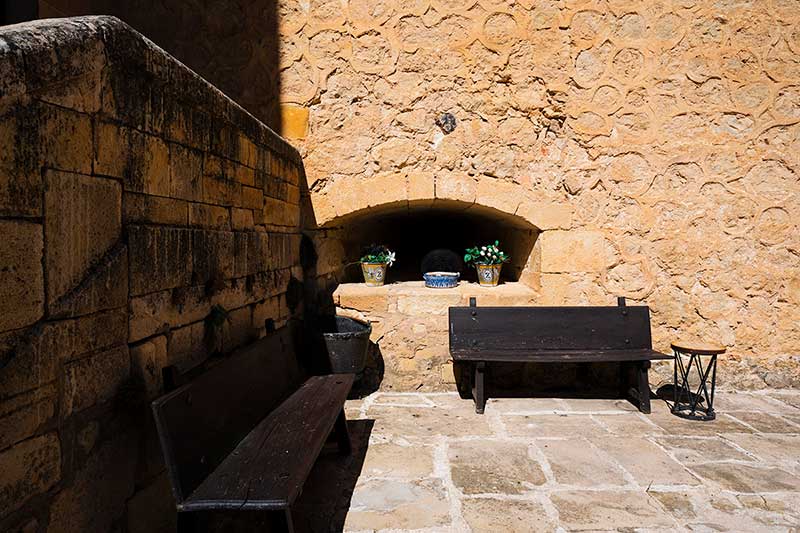
Here we are in front of a very important part of the castle’s defense: the cannon port. It’s strategically placed to aim directly at the main gate. Its job was simple: if enemies managed to enter through the gate, the defenders could shoot them with a cannon.
This type of defense was common in castles and fortresses of the time.
The cannon port isn’t very big, so it seems a small cannon, called a falconet, was used here. This cannon was easier to move and fired smaller balls, but strong enough to cause significant damage to any enemy that managed to get in.
Go to the center of the entrance courtyard where you will see an archway to the next courtyard. Before you enter through the archway, go to the next audio.
4. The passageway of time
Read description
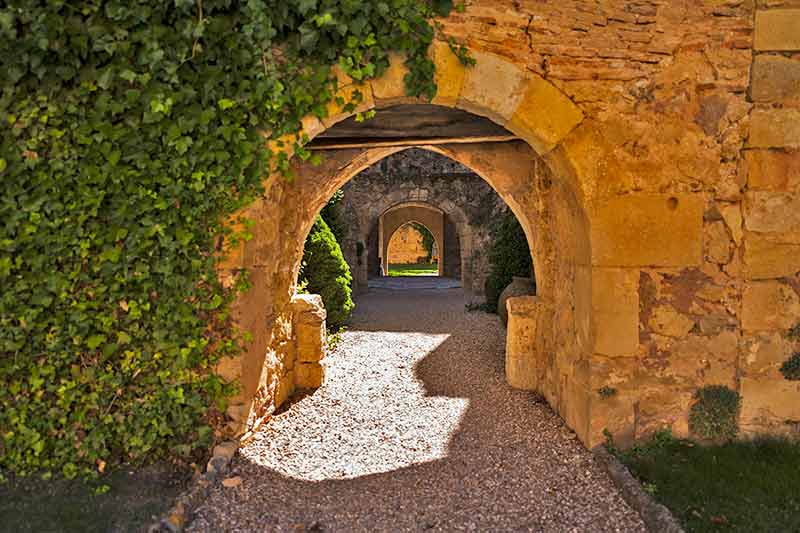
As you enter the passageway, the first arch you see is Gothic, with a pointed shape, and the next one is Romanesque, with a more rounded shape. This means that the castle was smaller at first and then expanded. The first part dates back to the 13th century, and the extensions and improvements were made at the end of the 15th century.
5. Portcullis
Read description
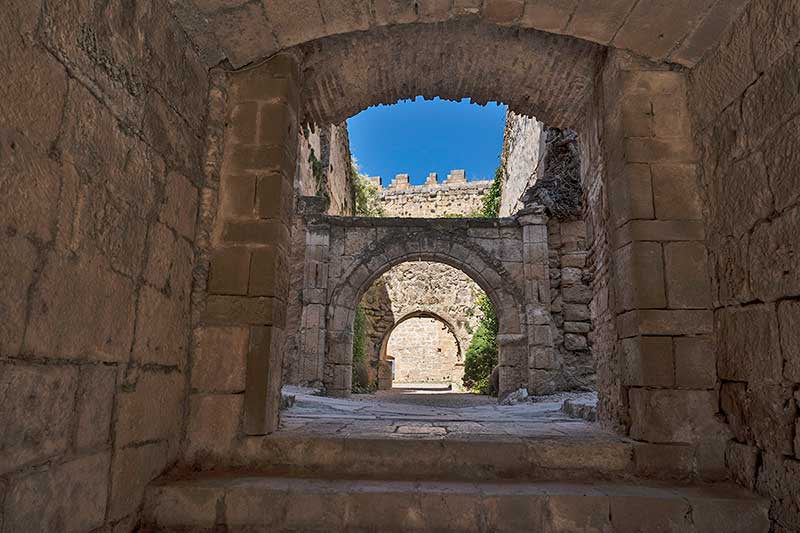
Almost all castles have a special door called a portcullis, which would drop like a guillotine. In Pedraza, the portcullis was located in the Romanesque arch of this passage. Although it disappeared centuries ago, you can still see marks of where it was. This door, also known as a grille, was essential for the defense of medieval castles. It was made of iron and could be dropped quickly to block enemies in case of a surprise attack.
It was the last barrier before reaching the castle’s interior, a real trap for invaders. Even if the attackers managed to break through the main gate, they would find themselves stuck in this passageway, facing the defenders.
When you exit the passageway and reach the bailey, you’ll notice that the construction changes.
6. The Bailey
Read description
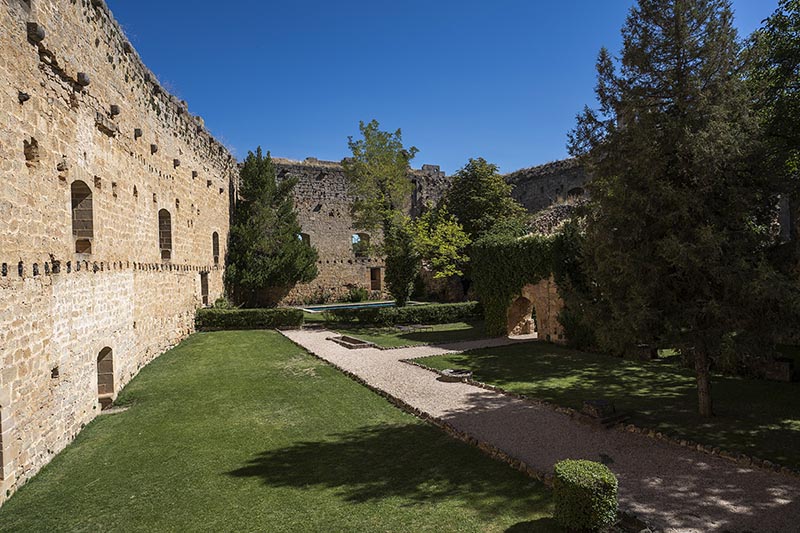
We’re now in the bailey. The bailey was the heart of the castle, where everything happened. Soldiers were trained here, and social events took place. It used to be smaller, and there were other structures like rooms, stables, and storerooms, but all of them were destroyed in a fire.
When Ignacio Zuloaga, a famous Spanish painter known for his portraits and landscapes that depicted Spanish life and culture, bought the castle in 1926, it was in ruins. Fire had destroyed several parts of the castle, and many stones and structural elements were missing. Zuloaga restored it, rehabilitated the towers, and used the space between them to build his studio and family residence. He also converted part of the space into gardens. He built a pool for his family and gave painting classes there, taking advantage of the light. Today, these gardens are perfect for parties, weddings, and events. The castle has also been used as a set for medieval series and films, such as Isabel, Águila Roja, and the horror series 30 Coins by Álex de la Iglesia.
6A. The Wall
Read description
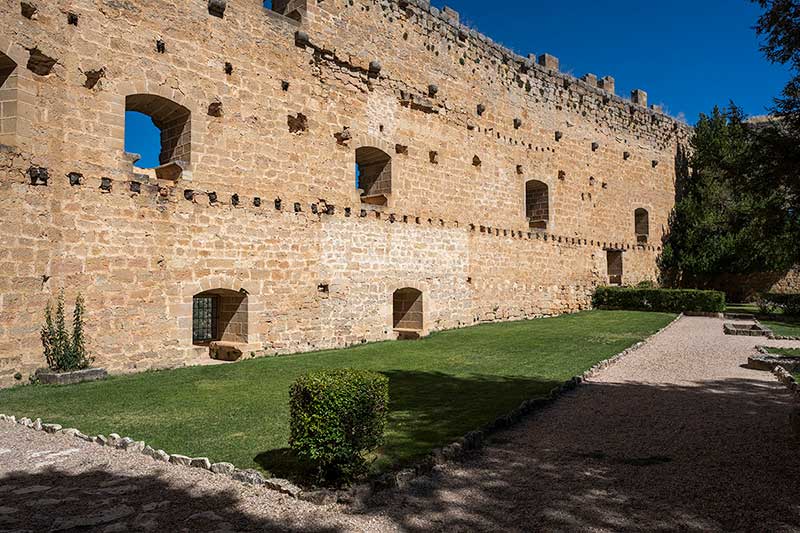
The stones of the walls practically tell the history of the castle. On the north side of the wall, you can see a stone extension that is part of the wall where wooden beams were supported, with their heads embedded in the stone. This wall ran parallel to the outer wall. This means the building had three floors, with most of the rooms on the first and second floors, with large windows and side benches to enjoy views of the forest.
6B. The Bell Tower
Read description
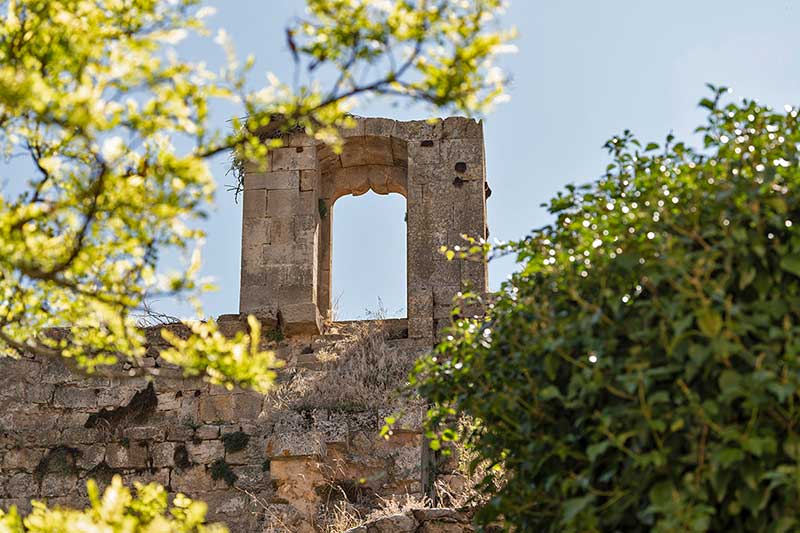
If you look up, just above the three arches that you have passed through to access this courtyard, you can still see the arch where a bell once hung, which remains intact and can be seen from afar. Its construction, with overlapping carved stones, has allowed it to withstand the weather, despite wind and ice. Although much time has passed, storks use it to build their nests.
6C. The Dungeon
Read description
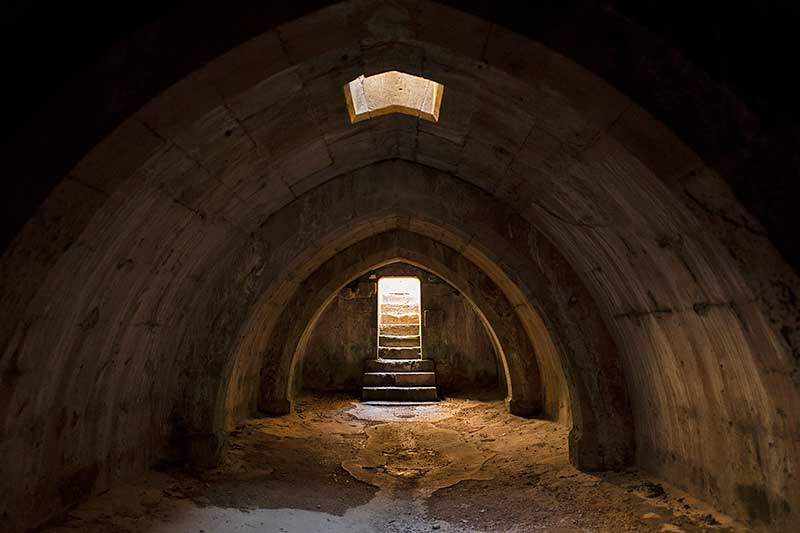
Although there’s a popular belief that all castles had dungeons, the reality is that it was more common to imprison people in cellars or isolated rooms since not all castles had their own dungeon. However, Pedraza Castle does have one, and you can visit it. It’s in the center of the bailey, with the Herrera family’s coat of arms, underground, dark, cold, and damp. Over the years and with fewer prisoners, it stopped being used to imprison people, and in its later years, it was used to store rainwater.
7. The Latrines
Read description
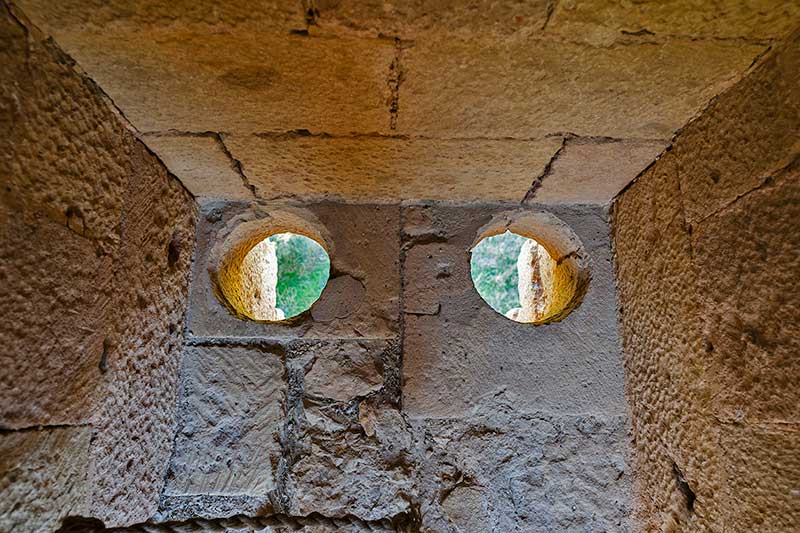
The latrines hanging from the highest walls were a common feature in medieval castles.
The latrine in this castle is located as you climb toward the first keep, or residential tower. They are like small balconies with two holes that allowed everything to fall outside the castle, thanks to gravity. They were usually near the lords’ rooms, and it wasn’t uncommon for two people to use them at the same time, as privacy wasn’t as important as it is today.
Did you know… in some castles, it was important to protect these holes during an enemy attack, as sometimes attackers tried to enter through them?
8. Ignacio Zuloaga
Read description
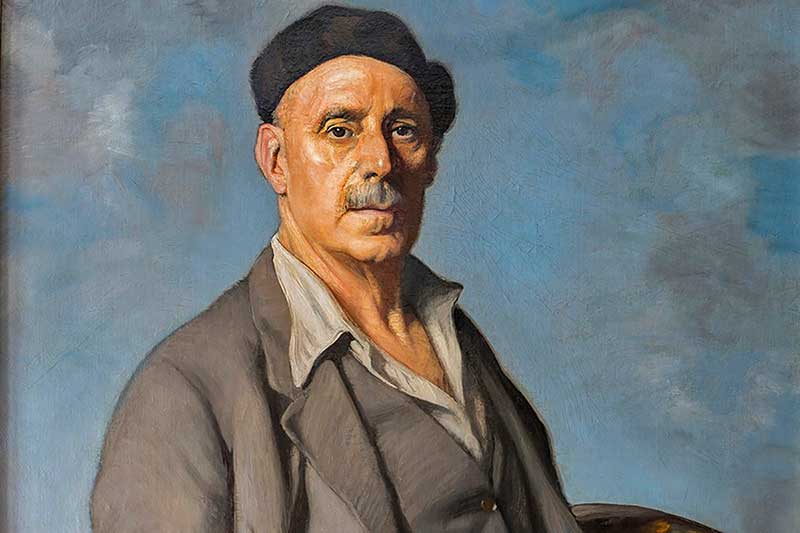
Ignacio Zuloaga was born in the Gipuzkoan town of Eibar in 1870 and is considered one of the great painters of Spain in the late nineteenth and early twentieth centuries, and probably the greatest artist of Spanish costumbrismo. He died in 1945 in Madrid.
Ignacio Zuloaga bought the castle and the church in 1926, saving Pedraza from becoming an abandoned town. At the time, Pedraza had about 1,500 inhabitants, but when the painter discovered the town, there were only 45 residents left. Almost all the houses of the former nobles were abandoned and in decay.
When in 1925 Ignacio Zuloaga acquired the medieval fortress of Pedraza, the first thing he did was to stop the spoliation and deterioration it was suffering.
9. Zuloaga Hall
Read description
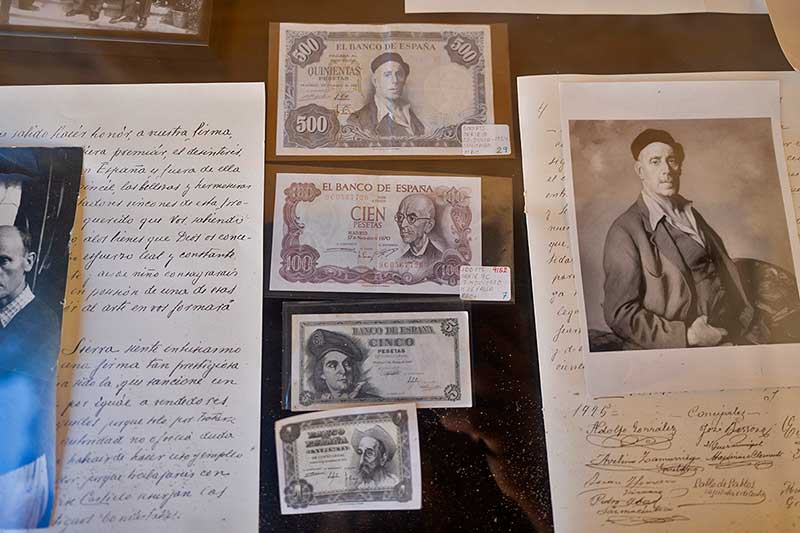
In this first tower, located in the interior, is installed the Zuloaga Hall dedicated to pay tribute to the artist with an exhibition of some replicas of his most famous paintings, especially those used in the banknotes that circulated in Spain in the twentieth century.
Franco’s regime, after the war and the isolation of Spain, needed to make itself strong by getting celebrities of the time and artists to support it. That is why Zuloaga’s work was featured on several banknotes that at the same time paid tribute to him directly.
Specifically, there were four Spanish banknotes that contained paintings by Ignacio Zuloaga, which you can see in this room.
9A.The 5 pesetas of 1948
Read description
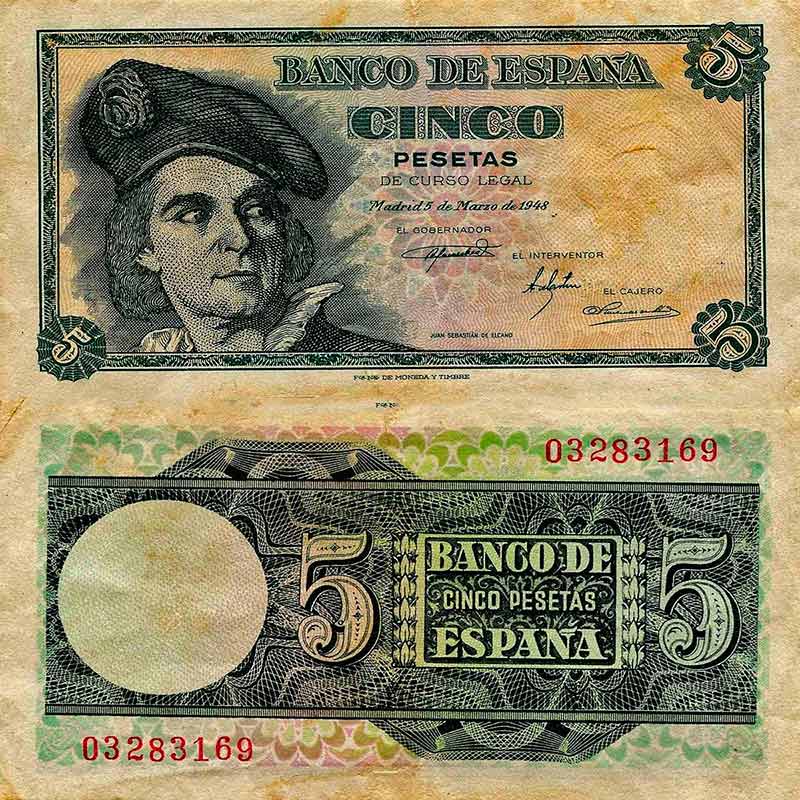
The first was the 5 pesetas of 1948. On it appears a portrait of Juan Sebastián Elcano, a sailor from Guipúzcoa who completed the first round-the-world voyage in 1522.
The problem that Zuloaga encountered was that there was no reference of what this sailor looked like.
Did you know that … the portrait that appears on the banknote is not of Juan Sebastían Elcano but of a friend of Zuloaga’s named Pío Gogoza Egaña? Zuloaga imagined Elcano as an arrogant and slender Basque. So he looked for a Basque with those characteristics to serve him as a model, and he found him in a friend of his named Pío Gogoza Egaña, a municipal veterinary inspector from Zumaya.
Imagine! Seeing your face on the banknotes without being anyone you know!
The original painting has been in the Provincial Palace of Guipuzcoa since 1921.
9B. 1 peseta of 1951- History of a friendship
Read description
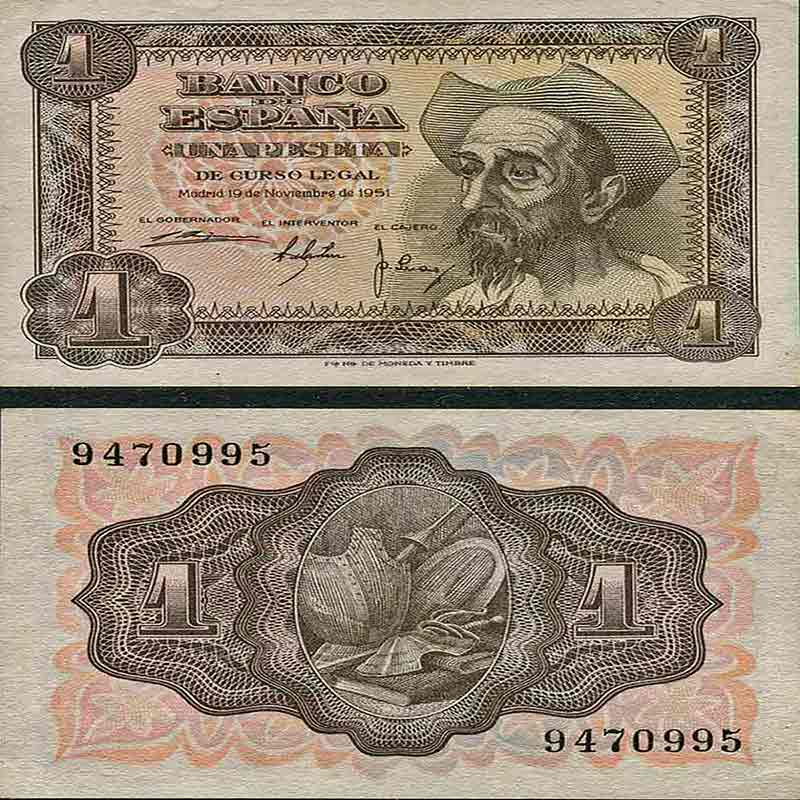
Then, in 1951, came the one peseta bill. A very well known and the most used banknote! 191 million copies were made. It was the penultimate peseta to be issued on paper.
On the front of the banknote there is a portrait of Don Quixote de la Mancha, and on the back we see representative elements of the ingenious nobleman: helmet, lance, shield, coat of arms and books. These drawings were also made by Zuloaga.
Did you know that these drawings were made by Zuloaga as a commission for a set design for an opera?
Let me tell you: we go back to 1918. This is the beautiful story of three friends. Winnaretta Singer, Manuel de Falla and Zuloaga. Let me put you in the picture:
Who was Winnaretta Singer, does the surname “Singer” ring a bell?
Winnaretta Singer was born in New York in 1865, heiress of the famous sewing machine company Singer Corporation, so you can imagine, she was a multimillionaire.
She married Prince Louis de Scey-Montvéliard at a very young age, because Winnaretta sought above all else the freedom that only an arranged marriage could give her. However, everyone knew that she was a lesbian, which she did not hide at all, and the Catholic Church decided to annul her marriage.
But Winnaretta married again and very quickly, with prince Edmond de Polignac, and why did she marry being a lesbian? Very easy, because Edmond was also homosexual and 30 years older than her. Of course, they had no children, but they were very good friends and together they managed to bring all the art and culture of the world to the city of Paris. She became a great patron, something like a patron of the time, and invested all her fortune in helping artists and subsidizing works. This is how she met the best musicians of her time, among them Manuel de Falla.
Did you know that Winnaretta also had relations with many married women? Famously, the husband of one of her lovers shouted at the door of her mansion “If you are half the man you think you are, come outside and fight with me”.
Winnaretta called Manuel de Falla and proposed to compose a chamber opera. Falla composed the opera, based on chapter 26 of the second part of Don Quixote. It consisted of a scene in which some puppeteers are representing a plot and Don Quixote, who as we already know confused fiction with reality, unsheathes his sword and starts beating the theater and the puppets.
Surely the title of this play is familiar to you, it was called “El retablo de Maese Pedro”.
Did you know that it took Falla more than 5 years to write it?
And what has Zuloaga to do with all this?
Manuel de Falla and Ignacio Zuloaga admired each other as artists. they became close friends and this friendship encouraged them to work together on a great project in which both artists directed the music and the stage. Falla was in charge of the music and Zuloaga of the scenography. You can imagine what this great project was, yes, El retablo de maese Pedro”.
Well, Zuloaga made a lot of sketches, concretely, the drawing of Don Quixote that appears with the famous barber’s empty is the one that appears on the 1951 peseta banknote.
In this way, the 1 peseta bill paid a triple homage to Spanish artists: on the one hand to Cervantes, on the other hand to Zuloaga and indirectly to Falla, author of the musical work. And all thanks to Winnareta Singer.
9C. 500 pesetas of 1954
Read description
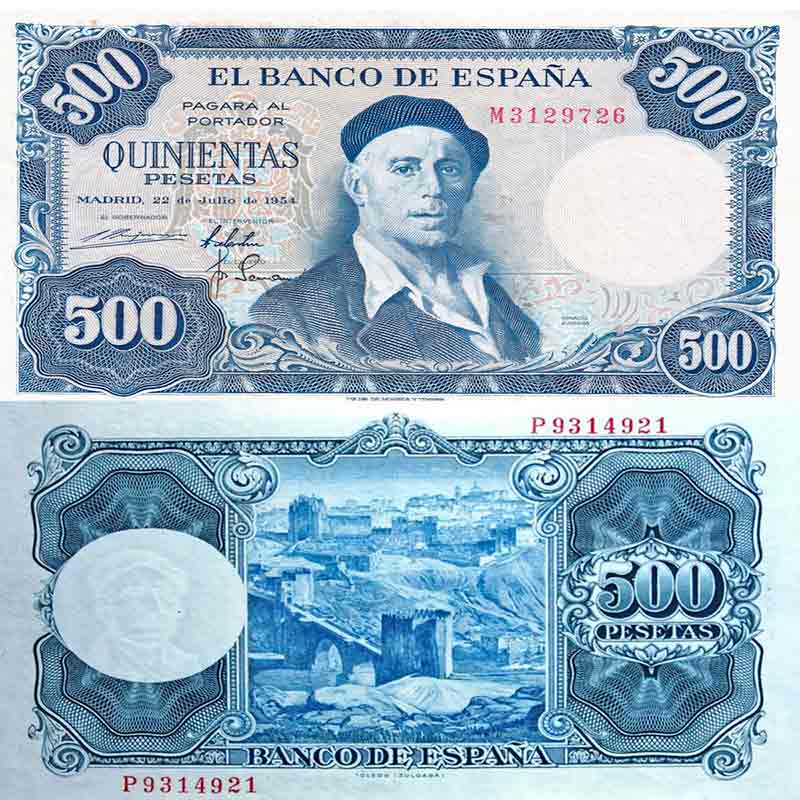
The 500 pesetas bill of 1954 is more a direct homage to Zuloaga. Not only to his work, but to the person himself.
On the front of the banknote is his self-portrait that he painted in 1942 when he was 72 years old. In fact, it is the last of the self-portraits he painted and the best known of all. It is called “Self-portrait with blue background” and critics say it is magnificent.
In the complete painting he appears with his painter’s brushes, with a vest, shirt, jacket and beret, giving a natural image of the country painter, close to the people, but at the same time dignified and with an intense look.
This self-portrait also appeared on the 1971 two-peseta stamps. And to this day, the original work is kept in the Zuloaga Foundation.
On the back of the banknote, you can see another work by Zuloaga that he painted in 1932: “Paisaje claro de Toledo” (Clear Landscape of Toledo).
To give you an idea, Toledo was not just any city for Zuloaga, he painted it up to six times between 1924 and 1938.
It is not strange that a Castilian landscape was chosen for this bill instead of a Basque one, which is where he was from, because the painter was also a lover of Castile, something he had in common with other artists of the generation of ’98.
9C. 100 pesetas of 1970
Read description
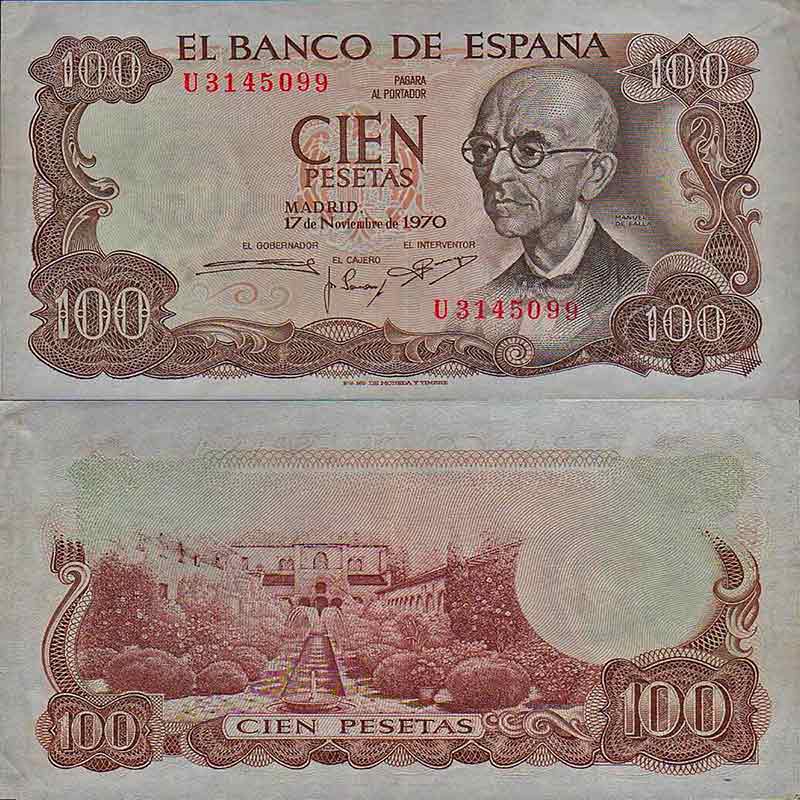
The 1970 100 pesetas is the last banknote on which Zuloaga’s work appears. This banknote is a total homage to his great friend Manuel de Falla.
On the front there is a portrait of him and on the back an image of the Alhambra in Granada, a city that is closely linked to Falla because although he was not born there, he did live in Granada for a long time.
The last time they saw each other was in 1932 in Zumaya, in Zuloaga’s house. It was there that he painted the well-known portrait of him.
In that work he is seen as a mature, elderly, and half sick person. Granada also appears. So this was the portrait that was used to represent Falla in this 1970 banknote, which apart from paying homage to Falla, also pays homage to the friendship he had with Zuloaga.
It has also been used on several Spanish stamps several times.
Manuel de Falla finally emigrated to Argentina in 1939, where he died on November 14, 1946 of tuberculosis, at the age of 69. He died almost a year after Zuloaga died in Madrid, on October 31, 1945.
10. The Keep
Read description
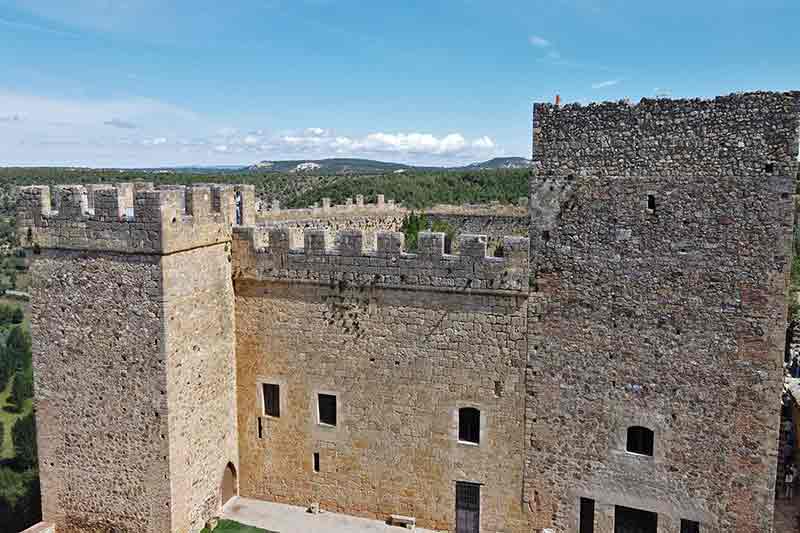
In a medieval castle, the keep is the tallest and strongest tower, and it is always located in the hardest part to attack. When Ignacio Zuloaga bought the castle, he restored this tower, which was in ruins, and turned it into his painting studio and residence.
The castle has six rooms that the Zuloaga family built between the remains of the two towers to live in. Each one is different, and in fact, you can stay in them because they are equipped with modern bathrooms and climate control. Can you imagine sleeping in a medieval castle with today’s comforts?
11. The Studio
Read description
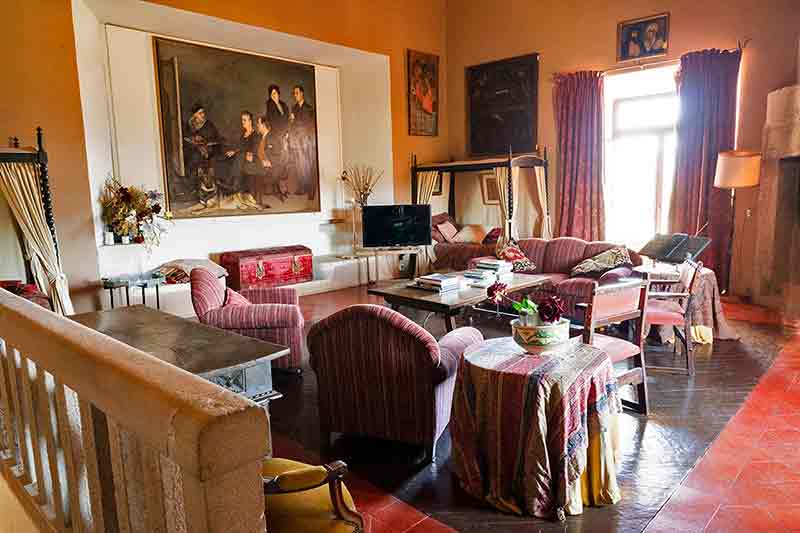
The main room of the keep is a large stone hall that Zuloaga used as his painting studio. It had two old canopy beds where he rested when needed and a large fireplace to keep warm on cold days.
12. Room Francis I King of France.
Read description
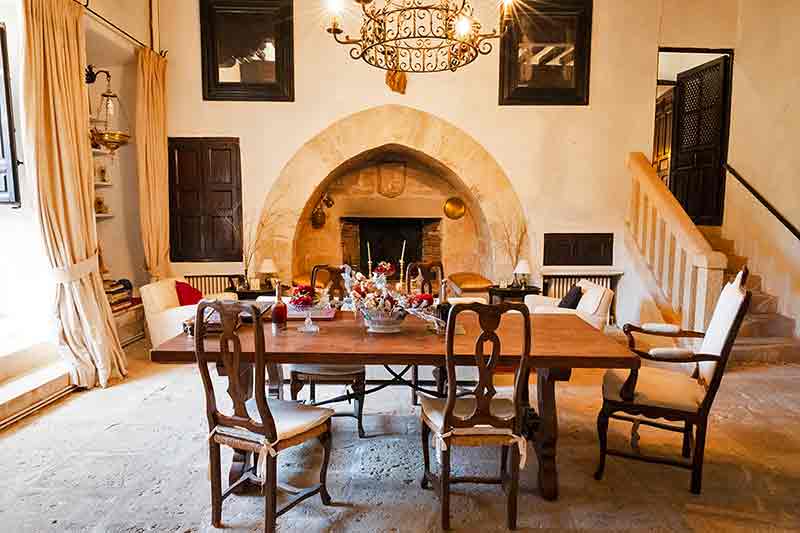
This room is dedicated to the children of the King of France Francis I. In 1529, two sons of the King of France, Francis I, were held in the tower of Pedraza Castle. This was to ensure that their father kept the agreement he made with Emperor Charles V after being captured at the Battle of Pavia in 1525. Francis I had promised to give up lands to Spain in exchange for his freedom, but as a guarantee, he left his sons, Henry (7 years old) and Charles of Orleans (4 years old), as hostages.
The children were imprisoned in Pedraza until 1530 when they were released following a new agreement between France and Spain. It is said that they lived in difficult conditions during their time in the castle: poorly dressed, in a dark, cold room, with only a few puppies to entertain them. This story has been passed down through generations, and it is said that, as revenge, Napoleon’s troops burned the castle centuries later.
13. The church courtyard
Read description
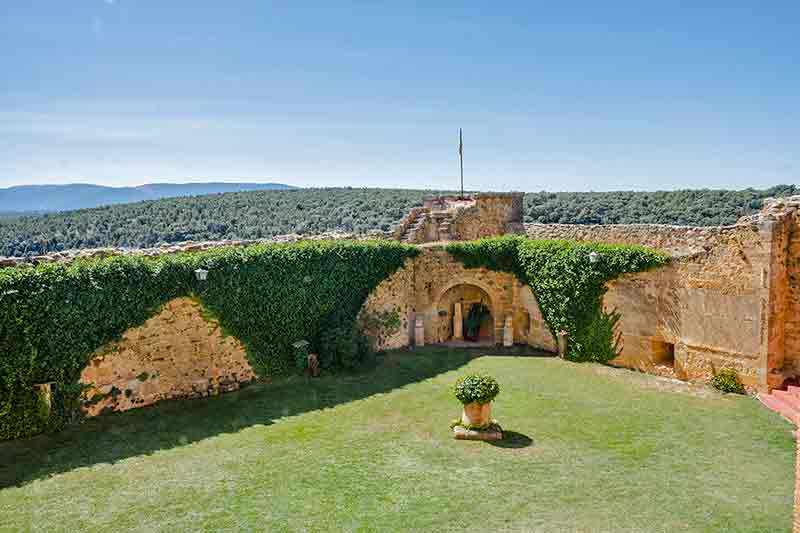
The courtyard facing south was the garden of the church. There used to be a small chapel here, but it no longer exists. Only the baptismal font remains, which can be seen next to the wall. In the center of the courtyard, there is also a very deep well that still provides water, though it is covered for safety.
14. Room “The lovers Elvira and Roberto”. The Legend of the Castle
Read description
Like any good medieval castle, Pedraza also has its legends and ghosts. It is said that a nobleman named Don Sancho became infatuated with a beautiful commoner named Elvira, whom he married by exercising his feudal right. But… she was in love with Roberto, a young farmer who, heartbroken by the wedding, entered a monastery and became a monk.
Years later, after the death of the castle chaplain (the priest responsible for religious services in the castle), the former farmer was chosen to take his place. Meanwhile, Sancho had to go to war to help defend Castile from the Almohad invasion.
Elvira and Roberto reunited, and their love rekindled. When Don Sancho learned of the infidelity, he decided to punish Roberto. During a dinner celebration, he ordered a crown of burning thorns to be placed on Roberto’s head, killing him instantly.
Doña Elvira, devastated, ran to her chambers, locked herself in, set the tower on fire, and stabbed herself in the heart with a dagger. Legend says that, on some summer nights, the souls of the lovers can be seen walking under a fiery glow.
In the room you will find a magical book. In homage to Elvira and Roberto, these two lovers who lived their love in secret within these walls, we would like you to write in this book, who is your secret love to share it with the protagonists of our legend. Surely this will make them not feel so alone and misunderstood, and who knows… maybe this will free their souls someday.
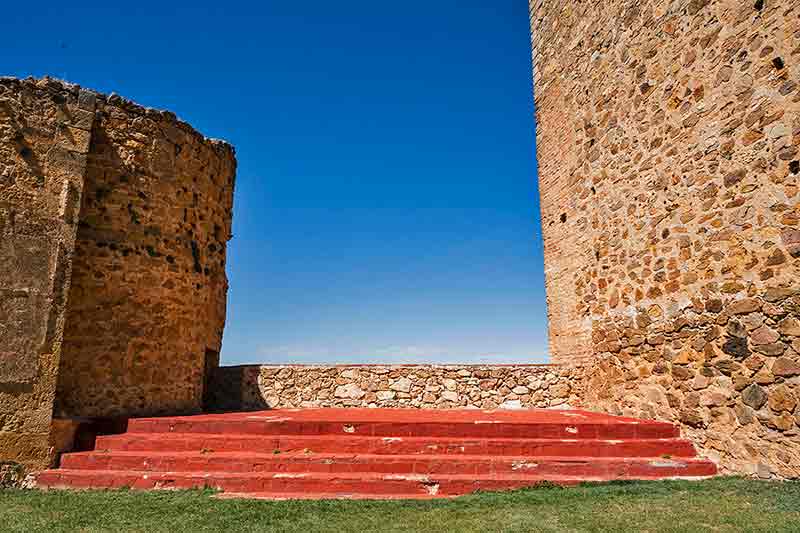
15. The Lookout
Read description
The most striking feature of this courtyard is the lookout that Zuloaga had built by dismantling part of the wall. From there, you can see the forests and enjoy incredible sunsets over the Sierra de Guadarrama.
Pedraza is located on top of a plateau, 1,060 meters above sea level, so you can imagine how amazing the views are. Around the castle, the fields are mostly used for agriculture and livestock, giving it a rustic and very traditional look.
From the castle, you can feel the cool breeze from the Cega River, which flows near Pedraza. This river, which is part of the Duero River, has helped make the nearby valleys fertile.
The vegetation around Pedraza is typical of the Castilian plateau. There are many trees like old holm oaks, pines, junipers, cypresses, and savins that fill the landscape. You can also see fields with cereal crops and meadows.
You can head towards the exit to hear the following story about the castle gate. The gate.
16. Gate
Read description
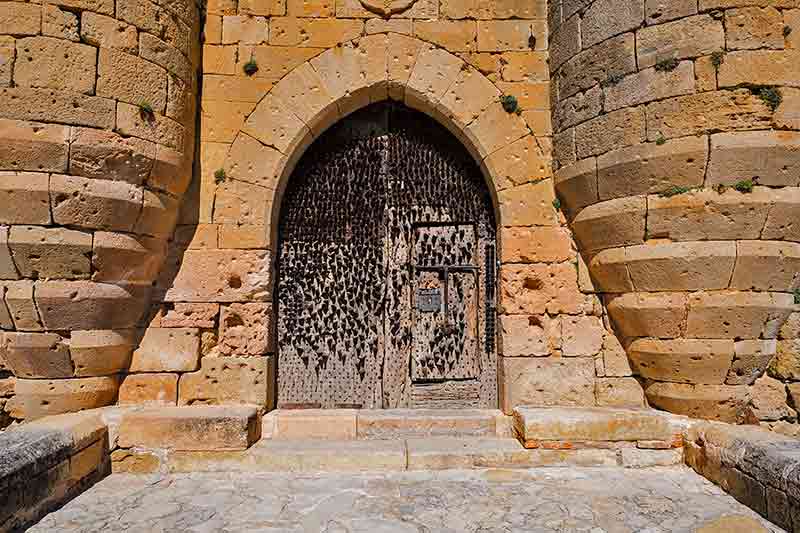
Few castles still have their original door in such good condition as the one at Pedraza Castle. It’s over 500 years old but still standing, thanks to several factors. First, it’s made of black poplar, a very strong wood, full of knots, and almost immune to woodworms when it dries well.
The iron spikes covering the door were handmade, one by one. They served to cushion enemy blows and gave the castle an image of strength. They are secured to a metal plate on the back so they couldn’t be ripped out. Although some are missing, especially at the bottom, many are still there.
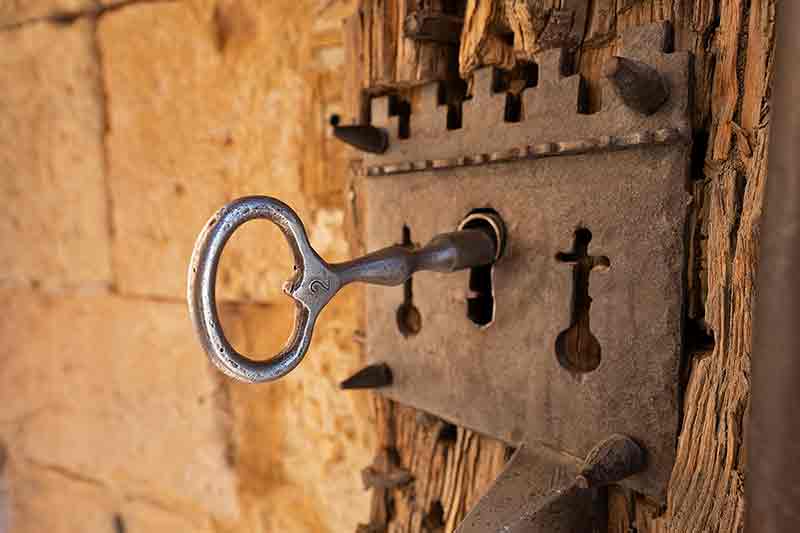
The door’s key is the original and is also impressive. It’s made from a single piece of metal and weighs about two kilos. Even though it’s been working for 500 years, its mechanism is very simple: the key itself pushes the bolt. Nowadays, there is a modern copy for security, but it remains a symbol of the castle.
17. Coat of Arms
Read description
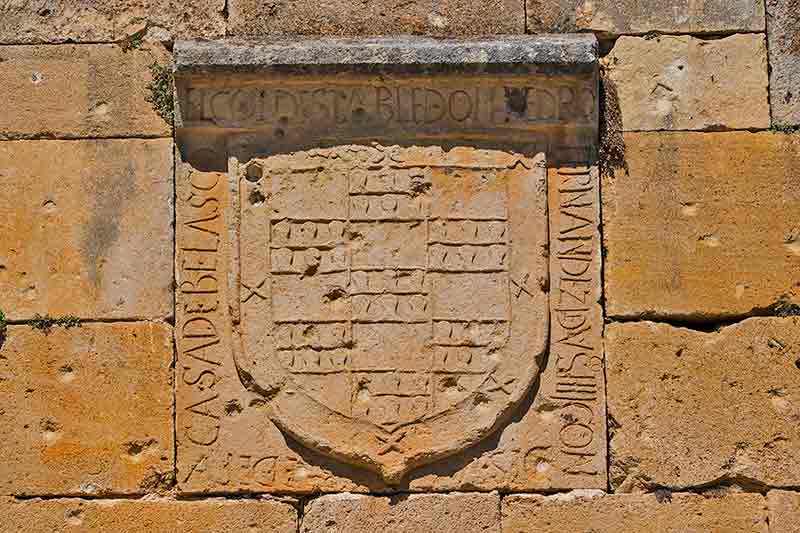
Once outside the castle, Above the main gate, on the facade, you can see the coat of arms of the Fernández de Velasco family, carved in stone. Remember that this family was very important and was the owner of the castle and the town of Pedraza. They also improved the castle, giving it a
These coats of arms were a way to show the nobles’ power over the area until 1812, when the Cortes of Cádiz abolished the feudal system.
Moreover, each coat of arms has a meaning. For example, the Fernández de Velasco coat of arms shows their wealth, power, and family protection with eight gold pieces representing generosity and seven figures symbolizing nobility and protection. As you walk through Pedraza, you can find more coats of arms from other important families that lived there, such as the Astorga, Osuna, Salcedo, and many others.
Did you know?… The feudal system was a way of organizing society in the Middle Ages. In this system, the king gave land to nobles (the rich) in exchange for loyalty and military aid. The nobles, in turn, let peasants live and work on their land, but the peasants had to give a portion of what they produced to the noble and were not completely free. In exchange, the nobles offered protection and security.
18. Drawbridge
Read description
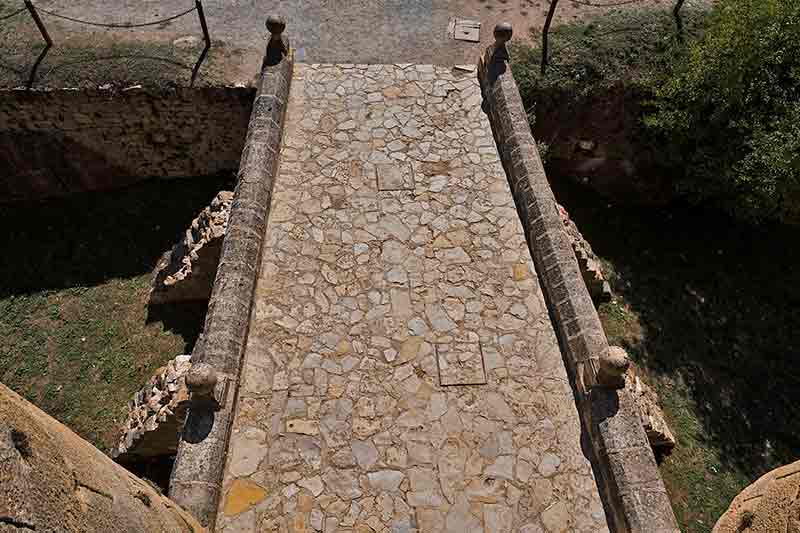
As time passed and new technologies arrived, drawbridges became less useful in castles, and little by little, they disappeared.
Above the gate, you can still see some remnants of the pulleys that lifted the bridge with chains. When the bridge was lowered, it rested on beams, which were replaced by the granite wall with balls that you can still see today. This drawbridge made the castle impenetrable.
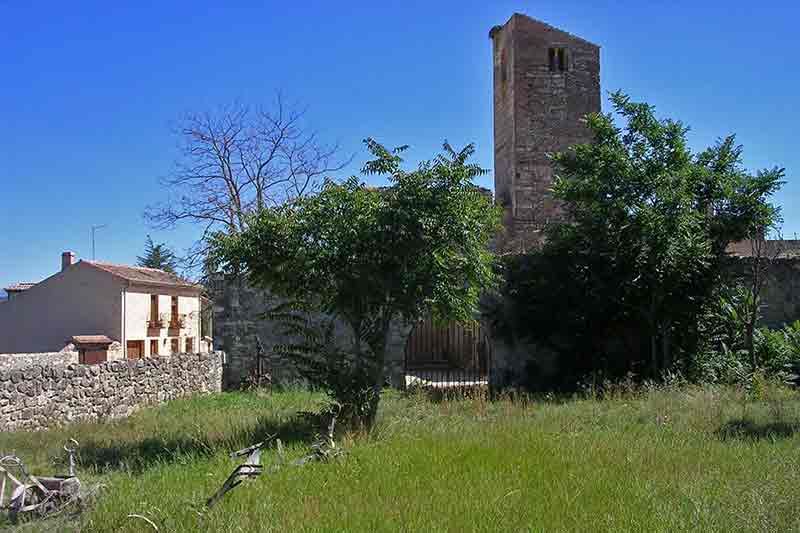
Once you have crossed the drawbridge, you will see ahead on the left a church in ruins. It is the Church of Santa Maria.
19. The Church of Santa María
Read description
When Zuloaga bought the castle and its surroundings, he also acquired the old Church of Santa María, which was in complete ruins, as it remains today. You can visit what’s left of it by walking along Calle de la Calzada toward the town. The church was built between the 11th and 12th centuries, and although not much remains, you can still see its apse, the semicircular window with an archivolt, and its capitals, typical of the craftsmanship of the time.
To enter the castle and the town, just like our ancestors did, you have to pass through a single gate: La Puerta de la Villa, which was part of the old defense system.
A little further away is the Natural Park of the Hoces del Río Duratón, perfect for hiking fans and for seeing incredible landscapes, like the canyons formed by the river. It’s a place you can’t miss!
20. Farewell
Read description
And here ends the visit to Pedraza Castle, we hope you have enjoyed this audio-guide and that you have found its content interesting.
We thank you for your visit and hope you come back soon! Goodbye!